

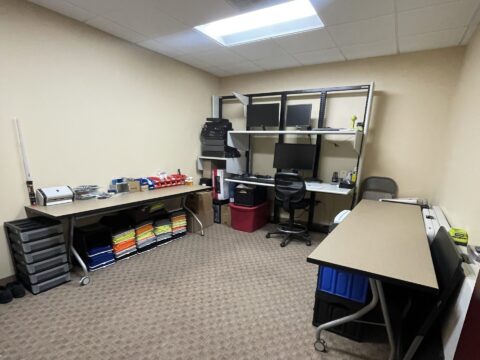
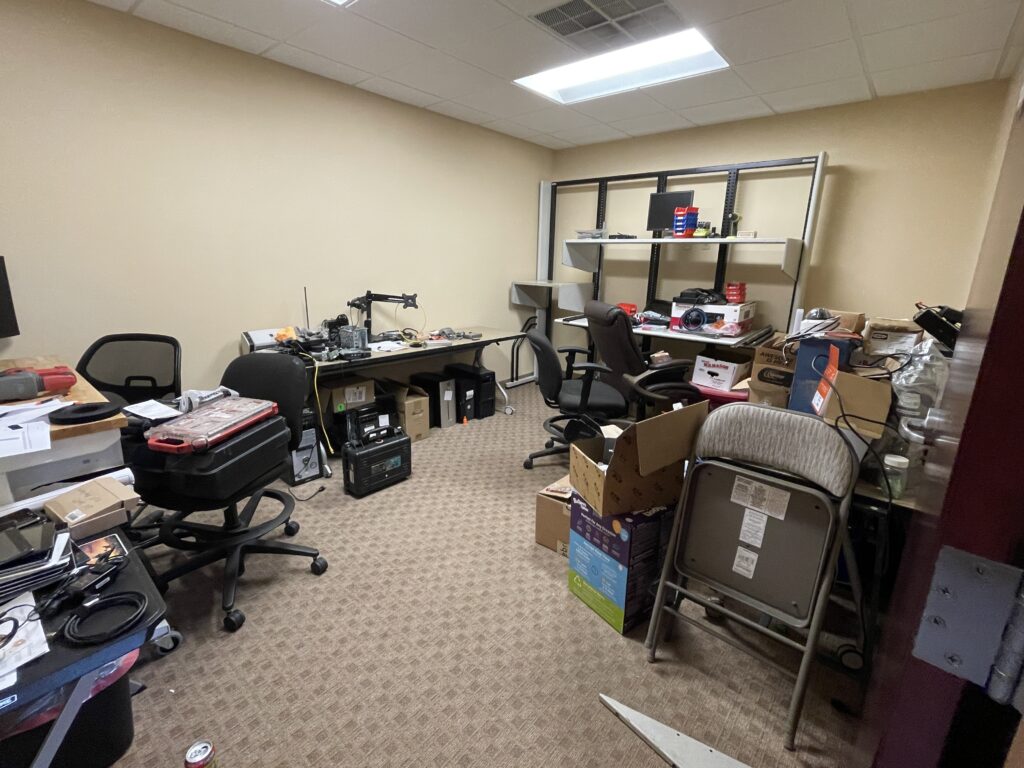
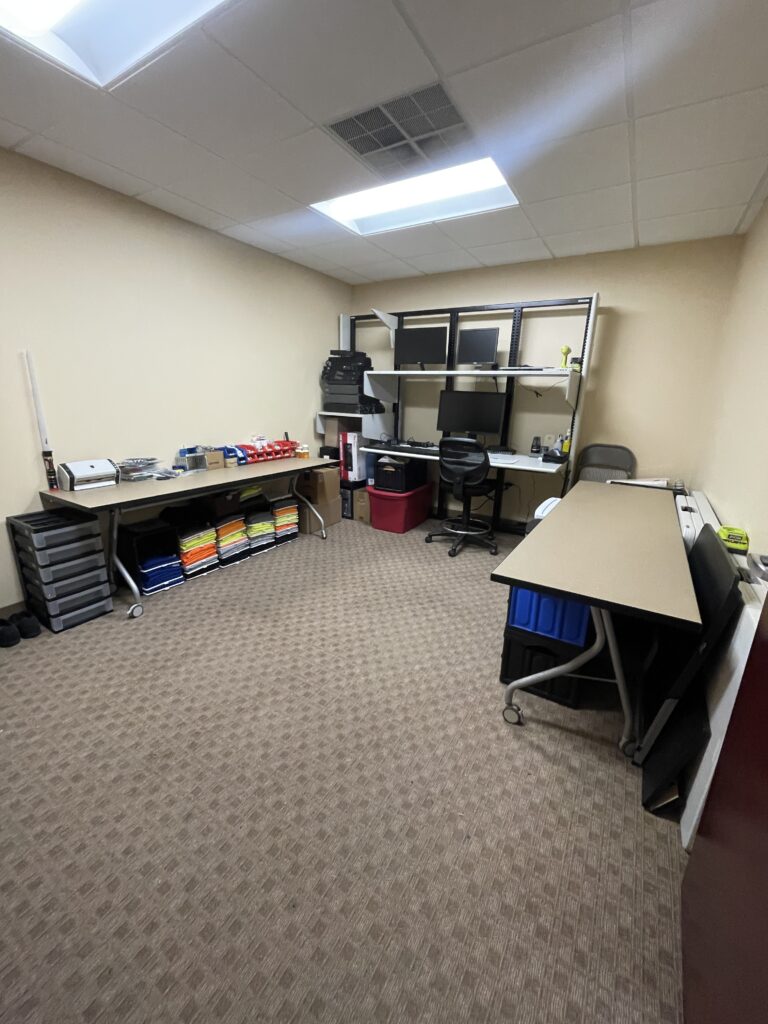
Relocating an office can be exciting. It’s a fresh start, a new space, a chance to reset. But in the middle of all that transition, it’s not uncommon for one room to quietly become a catchall for everything that doesn’t have a home yet.
That was exactly the case for one of my recent clients. After a smooth move into their new office, they quickly found that one room started collecting everything. Unlabeled boxes, years-old supplies, random furniture pieces. These things that were once useful but had now become visual clutter and a source of stress. It wasn’t long before that one room was no longer just a problem. It was becoming everyone’s problem.
The Catchall Room: A Common Office Challenge
This client isn’t alone. Offices, especially after a move, often end up with a “put it in there for now” room. But as the weeks go by, “for now” becomes permanent, and the space that could be useful turns into a black hole of forgotten items.
When I arrived, we didn’t just tackle that one overflowing room. We used it as an opportunity to take a step back and look at the office as a whole.
The Edited Maison Approach
We started by editing that back room. We carefully sorted through each item, opening long-forgotten boxes, and asking the key question: Does this serve the current team, the current space, and the current needs?
Then we took it further. As we found systems that worked in that one room, we applied them across the office:
Supply areas were streamlined and labeled.Overflow was donated, recycled, or properly stored.Clear zones were created for things like tools, inventory, and shared resources.
What had started as a small project became a full-office edit and the results were immediate.
The Result: A Workplace That Works
Employees no longer had to dig through piles or wonder where things belonged. The space felt lighter, more intentional, and easier to navigate. Best of all, the team could focus on their work without the daily distraction of disorganization.
Whether at home or at the office, organization is about more than where things go, it’s about how a space functions for the people in it.